Manufacturers rarely lose efficiency through one dramatic failure. More often, small delays accumulate across shifts, machines, and handoffs. A five-minute changeover becomes an hour each week. A missing tool stops an entire line. A late quality check creates hidden rework.
This guide explores how to optimize production efficiency in manufacturing through practical, measurable improvements. It covers production planning, preventive maintenance, workforce training, process standardization, inventory control, and real-time performance data. Key indicators such as overall equipment effectiveness, takt time, first-pass yield, and unplanned downtime can reveal where capacity disappears. Yet numbers alone are not enough. Operators often notice recurring problems before dashboards do.
W. Edwards Deming, a leading authority on quality management, said, “If you can’t describe what you are doing as a process, you don’t know what you’re doing.” His observation remains useful on a modern factory floor. Efficient production depends on clearly defined work, stable processes, and disciplined learning. It also requires honest review. A new software system will not repair poor maintenance habits. Faster machines may increase defects. Lean initiatives can fail when employees feel ignored.
There is no universal formula. Every plant has different products, constraints, skills, and customer demands. Some improvements will work immediately. Others will need testing, adjustment, and humility. The following ten approaches provide a practical starting point for building safer, more reliable, and more productive manufacturing operations.
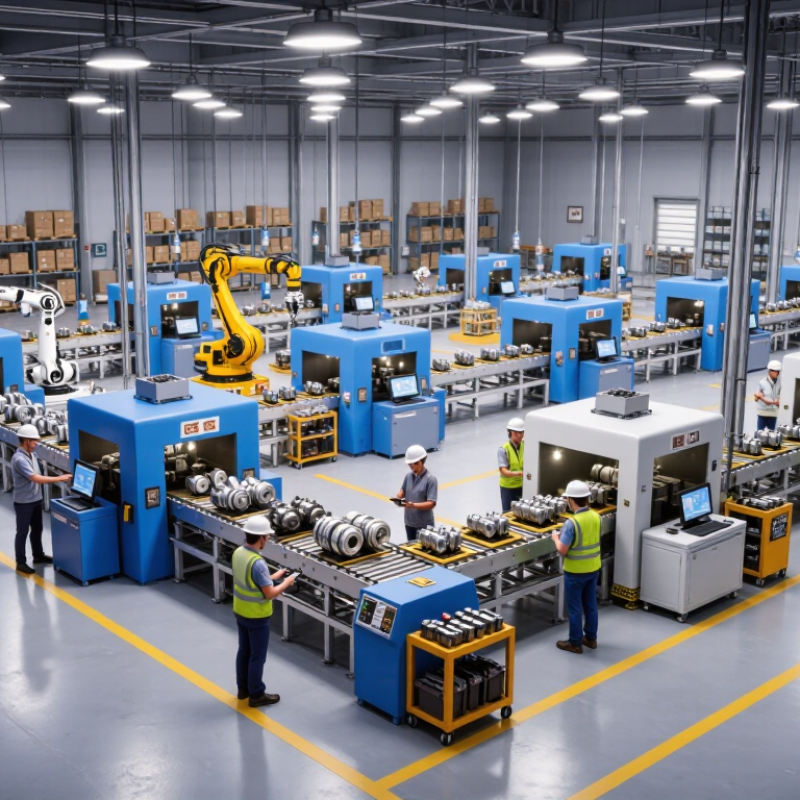
Assessing manufacturing performance begins with facts from the floor, not assumptions from spreadsheets. Track output, cycle time, first-pass yield, downtime, changeover duration, and work-in-process inventory. Walk the line during a busy shift. A machine may show high utilization while operators wait for materials. Measure the queue.
The International Energy Agency reports that industry consumes about 37% of global final energy. Small performance losses therefore create large operational and environmental costs. Compare planned cycle times with actual timings at each workstation. Review stoppage records by cause, duration, and frequency. A ten-minute delay repeated twenty times can exceed one major breakdown. That hurts.
Deloitte’s 2024 Smart Manufacturing and Operations Survey found that 86% of leaders expect smart manufacturing to strengthen competitiveness within five years. Yet digital tools cannot repair poor data. Start with one production cell and validate every timestamp. Use value-stream mapping, constraint analysis, and hourly performance boards. World Economic Forum lighthouse research also documents double-digit gains after factories target specific bottlenecks, rather than digitizing everything at once. In practice, our first dashboard looked impressive but missed manual inspection delays. That mistake was useful. Recheck the data with operators before changing equipment, staffing, or schedules.
Lean manufacturing begins with observing the floor, not guessing from reports. In my experience, walking beside operators reveals delays that dashboards often miss. Mark each process step, from material arrival to final inspection. Remove unnecessary movement, repeated approvals, and idle waiting. A clearly labeled tool station can save seconds on every unit. Those seconds accumulate across a full shift. Standard work instructions also reduce variation, especially during staff changes. Keep them visual, brief, and easy to update.
Tips: Track one workflow for a week. Record waiting time, rework, walking distance, and machine changeovers. Ask operators what disrupts their rhythm. Their answers may challenge management assumptions. Use small improvement cycles, then measure results with cycle time, defect rate, and on-time output. Do not change five variables at once.
Our first improvement attempt failed. We moved materials closer to the line, but created congestion near an emergency exit. The solution required a safer layout review and operator testing. This reminded us that efficiency cannot ignore safety or quality. Daily five-minute meetings can surface problems early, while preventive maintenance protects steady production. Still, lean systems need honest review. A process may look efficient on paper and feel exhausting in practice.
Top 10 Ways to Optimize Efficiency in Manufacturing
Integrate Automation, Smart Equipment, and Digital Process Controls
Manufacturing efficiency improves when technology solves a clear production problem. Automation should remove repetitive handling, reduce errors, and support safer operator decisions. At one pilot cell, sensors tracked temperature, vibration, and cycle time every few seconds. Supervisors then adjusted maintenance schedules before minor faults became costly stoppages. The improvement was measurable, but the first setup created too many alerts. It exposed a planning weakness.
Tips: Begin with one process. Map its delays, quality issues, and manual checks. Select automation that fits existing workflows, not fashionable specifications. Connect smart equipment through secure, compatible data systems. Keep manual overrides available during unusual conditions. Small tests reveal more than confident assumptions.
Digital process controls can standardize pressure, speed, and material movement across shifts. Operators receive live readings instead of relying only on handwritten logs. Clear thresholds help teams react quickly, while historical records support root-cause analysis. However, dashboards can distract workers when every metric appears urgent. Limit displays to useful signals, and review alarm settings regularly. Training must include real production scenarios, not only classroom demonstrations. A well-designed system strengthens human judgment; it does not replace it. Efficiency gains should be checked against maintenance effort, product quality, and employee feedback.
Manufacturing efficiency begins with people who can see problems early, not merely operate machines. In a well-run plant, supervisors map each task, then compare training records with actual performance. Short skills assessments reveal gaps in measurement, maintenance, safety, and digital reporting. Training works best beside the equipment. A technician can practice calibrating a sensor, recording the result, and explaining a deviation before production resumes. Keep lessons practical.
Five focused minutes can prevent an hour of rework.
Collaboration must reach beyond daily meetings. Operators, engineers, quality staff, and planners should review one recurring defect together. At a shared board, they can trace the batch, machine setting, material condition, and handover notes. Clear ownership prevents quiet assumptions.
A shift change should include three facts: what changed, what remains open, and who will check it.
I have seen teams improve quickly when questions are welcomed instead of treated as criticism. Still, meetings can become theater if nobody measures the action afterward.
Operational standards turn good intentions into repeatable work. Use visual instructions, approved settings, inspection points, and escalation steps near each workstation. Review them after a near miss, process change, or repeated delay. Standards should guide judgment, not bury workers under paperwork.
Managers need to audit respectfully, observe real practice, and correct unclear instructions. Some procedures will fail in actual conditions.
That failure is useful evidence.
Track training completion, first-pass yield, downtime causes, and corrective-action aging each week. Reliable data exposes habits that polished reports may hide.
Top 10 Ways to Optimize Efficiency in Manufacturing
Use Preventive Maintenance and Data Analysis for Continuous Improvement
A quiet machine is not always a healthy machine. In practice, small temperature changes often appear before a major stoppage. Teams should inspect vibration, motor current, lubrication, and cycle time during scheduled maintenance. These checks create useful evidence, not guesses. The U.S. Department of Energy reports that predictive maintenance can reduce maintenance costs by 8% to 12% compared with preventive maintenance. It can also reduce downtime by 35% to 45% (Operations & Maintenance Best Practices Guide).
Data becomes valuable when operators can act on it. A simple dashboard can compare planned hours, actual output, defect rates, and repeated alarms. Maintenance staff should review these measures weekly, then adjust inspection intervals. An abnormal reading should trigger a clear work order, not another spreadsheet. The International Society of Automation notes that reliable industrial data depends on consistent measurement, communication, and process discipline. Fancy software cannot repair poor data collection.
Small improvements matter.
However, preventive schedules are not automatically efficient. Some plants replace parts too early, creating waste and unnecessary labor. Others trust sensors without checking them. That is a mistake. Calibration can drift, and operators may ignore alerts after repeated false warnings. A practical program needs technician feedback, verified thresholds, and documented failures. Review the results after each maintenance cycle. The first plan may be wrong. That is acceptable, if the next decision uses better evidence.
Begin with one process, such as repeated material handling or frequent manual inspections. Map delays, quality problems, and unnecessary checks. Start small.
Sensors can track temperature, vibration, and cycle time every few seconds. These readings may reveal faults before equipment stops. However, too many alerts can confuse supervisors.
Choose equipment that fits existing workflows and solves a clear production problem. Avoid selecting systems only because their specifications look impressive. That assumption failed.
They standardize pressure, speed, and material movement across different shifts. Live readings reduce reliance on handwritten logs. Clear thresholds help operators respond faster.
Display only signals that support immediate decisions. Review alarm settings regularly and remove low-value warnings. Every metric cannot be urgent.
Train beside real equipment, not only in classrooms. Employees can calibrate a sensor, record results, and explain unusual readings. Five focused minutes can prevent an hour of rework.
Operators, engineers, quality staff, and planners should examine one recurring defect together. They can trace the batch, machine setting, material condition, and handover notes. Measure the agreed action afterward.
A handover should state what changed, what remains open, and who will check it. Keep the details visible near the workstation. Vague notes create avoidable delays.
Use visual instructions, approved settings, inspection points, and escalation steps. Review them after near misses, process changes, or repeated delays. Some procedures will fail in real conditions.
Track training completion, first-pass yield, downtime causes, and aging corrective actions. Compare these results with maintenance effort, product quality, and employee feedback. Polished reports may hide habits.
Optimizing manufacturing efficiency begins with a clear assessment of current performance. By measuring cycle times, throughput, defect rates, resource usage, and delivery reliability, manufacturers can identify bottlenecks and prioritize improvements. A practical approach to how to optimize production efficiency in manufacturing is to streamline workflows through lean practices, remove unnecessary steps, reduce waiting and material movement, and establish consistent procedures that support smooth production.
Long-term gains also depend on combining technology with capable people. Automation, smart equipment, and digital process controls can improve accuracy, visibility, and responsiveness when they are matched to operational needs. At the same time, regular training, effective collaboration, and well-defined standards help employees solve problems and maintain quality. Preventive maintenance reduces unexpected downtime, while data analysis reveals trends and supports continuous improvement. Together, these methods create a more efficient, reliable, and adaptable manufacturing operation.

HYDRA CNC