Understanding what is the difference between prototyping and mass production begins with the purpose of each stage. Prototyping turns an idea into something visible, testable, and changeable. A team may print one enclosure, wire a temporary circuit, or assemble ten samples by hand. These early units reveal problems that drawings often hide. A button may feel too stiff. A seam may split during testing. Small failures matter.
Mass production follows a different discipline. It repeats an approved design across hundreds, thousands, or millions of units. Manufacturers focus on stable materials, repeatable tooling, controlled tolerances, inspection procedures, and predictable costs. A prototype can survive several manual adjustments. A production line cannot depend on them. That difference is easy to underestimate.
IDEO founder David Kelley is often credited with saying, “Fail often so you can succeed sooner.” His observation captures the practical value of prototypes. They create a lower-cost space for learning before factories, molds, and supply chains become difficult to change. Yet this process is not perfectly linear. Some teams prototype too little. Others keep refining attractive samples without proving manufacturability. That is where judgment becomes essential.
This guide explains how to tell prototyping from mass production through materials, quantities, tooling, quality control, labor, and risk. It also examines the uncertain middle stage, where a product may look finished but still lack production readiness. The distinction is practical, not merely technical. It can protect budgets, shorten development cycles, and prevent avoidable defects. Mistakes still happen. Good engineering makes them visible earlier.
What Prototyping and Mass Production Mean
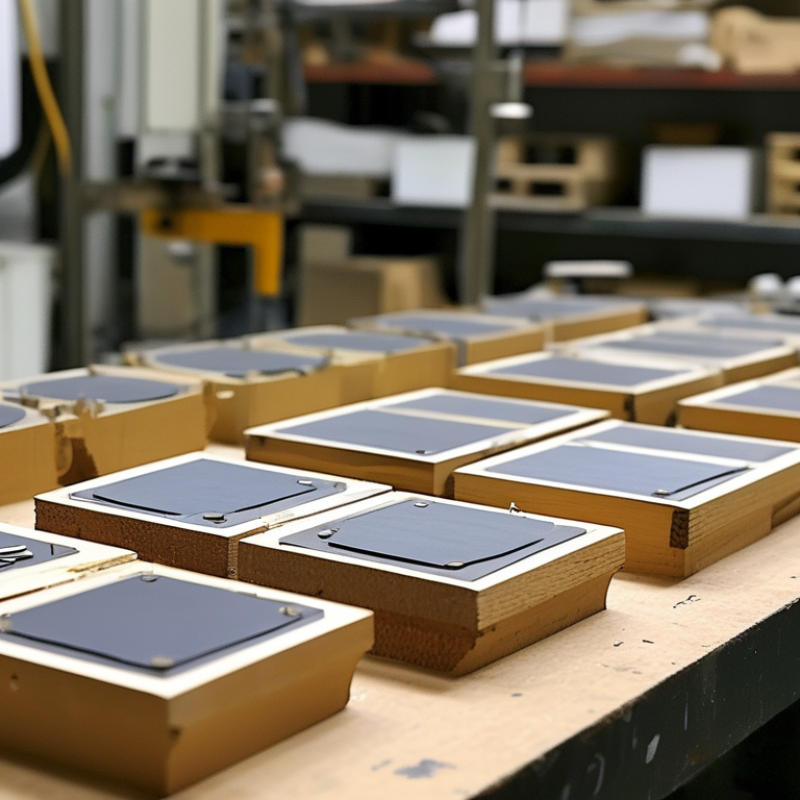
Prototyping and mass production describe different stages of making a product real. Prototyping creates an early, limited version for learning. Engineers may print a housing, machine a metal bracket, or assemble a small batch by hand. The goal is not maximum output. It is to test dimensions, function, usability, and risks before expensive tooling begins.
A prototype can reveal that a button feels too stiff or that two parts collide after repeated movement. Engineers can change materials quickly and document each revision. These models are often made with flexible processes, so their surface finish and strength may differ from the final product. It is provisional.
Mass production means making many consistent units under controlled conditions. It requires approved drawings, stable materials, production tooling, inspection methods, and clear acceptance limits. A factory may check a critical diameter with a gauge, record results, and trace defects to a specific batch. The process must work repeatedly, not only once on a careful workbench.
Scale changes everything. A design that succeeds in five units may fail in ten thousand. Heat, supplier variation, assembly speed, and maintenance can expose weaknesses. In practical reviews, teams sometimes trust an attractive prototype too quickly. That judgment deserves challenge. A better decision uses pilot runs, measured data, user feedback, and documented process changes. The boundary between the stages is not only quantity; it is the level of control, repeatability, and evidence behind each unit.
How Prototyping and Mass Production Differ
Prototyping and mass production may use similar drawings, but they answer different questions. A prototype asks, “Does this design work?” Mass production asks, “Can thousands of identical units work safely and consistently?” In a workshop, engineers may print one housing, sand an edge, and adjust a screw hole by hand. That flexibility exposes design problems quickly. It does not prove the product is ready for a factory line.
Prototype parts often use flexible materials, temporary fixtures, or slower processes. Their dimensions can vary slightly between iterations. Engineers focus on fit, function, user feedback, and risk discovery. Measurements, test records, and revision notes build reliable evidence. However, a successful prototype can still hide weak assumptions. We sometimes test the ideal sample too carefully. Real production introduces tool wear, operator differences, material batches, and packaging stress.
Mass production requires repeatable tooling, controlled parameters, approved materials, and clear inspection points. A production team checks tolerances with calibrated gauges, monitors defect rates, and verifies safety before release. Cost also changes the decision. A hand-finished prototype may be affordable once, but impossible at ten thousand units. Pilot runs help bridge the gap. They reveal bottlenecks, assembly time, and inconsistent results before full output begins. I have learned that “works once” is not enough. A process must work on a tired Tuesday, too.
Key Stages in the Prototyping Process
2026 How to Tell Prototyping from Mass Production
Key Stages in the Prototyping Process
Prototyping is not a smaller version of mass production. It is a controlled learning cycle. The process usually starts with a clear use case, measurable requirements, and rough sketches. Engineers then select materials, build an initial model, and test fit, function, safety, and user handling. A prototype may use temporary parts. That is acceptable. Its purpose is to expose weaknesses before tooling and volume commitments.
The next stage turns observations into revisions. Teams compare test data with requirements, record failures, and adjust dimensions, tolerances, or assembly steps. A second or third prototype often reveals problems hidden in the first build. I have found that rushed approvals create expensive surprises later. One imperfect test can be more valuable than a polished demonstration. After design verification, a pilot run checks repeatability, inspection methods, supplier consistency, packaging, and production speed. Only then should a design move toward mass production.
Tips: Keep every revision traceable. Photograph critical features and record material batches. Test under realistic temperature, load, and handling conditions. Do not treat positive feedback as proof of readiness. Ask an independent reviewer to challenge the design. A simple checklist helps, but it cannot replace judgment. Leave room for another iteration. That may feel inefficient. It often prevents larger waste.
2026 How to Tell Prototyping from Mass Production — Key Stages in the Prototyping Process
Prototype builds are typically small, engineering-focused, and used to validate form, fit, function, and manufacturability. Mass production uses approved designs, qualified processes, controlled tooling, and substantially larger production lots.
The quantities shown are representative lower-bound build levels commonly used to distinguish development stages; actual lot sizes vary by product complexity, industry, tooling, and quality requirements.
Key Stages in the Mass Production Process
How to Tell Prototyping from Mass Production
Mass production begins when repeatability matters more than a successful sample. The gate is not a larger purchase order. It is a controlled process. Teams freeze drawings, tolerances, approved materials, and inspection methods. Engineers then run design-for-manufacturing reviews. They check tool access, part ejection, cycle time, and operator handling. A pilot build exposes hidden friction. Our first yield target was optimistic. Several parts passed inspection but jammed during assembly. That mistake changed the fixture, not the product.
The next stage is process validation. Factories qualify tooling, equipment settings, work instructions, and measurement systems. They record first-article results and establish a control plan. Capability studies test whether critical dimensions remain stable. The World Economic Forum’s 2023 Global Lighthouse Network report describes productivity gains of up to 30% at advanced manufacturing sites. This is not a promise for every factory. It is a useful benchmark. Production-readiness reviews should also test packaging, traceability, incoming inspection, and supplier capacity. A clean sample proves little.
During ramp-up, output increases in measured steps. Quality teams monitor yield, scrap, rework, downtime, and field-return signals. Deloitte’s 2023 Smart Manufacturing and Operations Survey found that 86% of manufacturers viewed smart manufacturing as a major competitiveness driver. Data helps. Sensors cannot repair vague ownership. When defects appear, teams contain stock, identify root causes, and verify corrective action. Mass production depends on this evidence chain. It is less glamorous. Some factories release too early. That pressure remains a costly lesson.
How to Choose Between Prototyping and Mass Production
Choosing between prototyping and mass production starts with uncertainty, not volume alone. The 2024 Wohlers Report valued global additive manufacturing at $20.035 billion, with 13.5% annual growth. That growth creates more options, but it can also encourage premature scaling. An industry survey published in 2024 found that 83% of respondents used additive manufacturing for prototyping. The signal is clear. Testing still matters.
Choose prototyping when the design may change, tolerances remain unproven, or user feedback is incomplete. Print five to fifty parts, inspect warped edges, and test assembly with real fasteners. Record cycle time, material waste, and rework. My first cost estimate is often wrong. Small batches reveal hidden labor, especially during sanding, fitting, and inspection.
Move toward mass production when drawings are frozen, demand is measurable, and quality checks are repeatable. Compare tooling costs with expected lifetime volume. A pilot run can expose weak assumptions before production commitments become expensive. The World Economic Forum’s 2024 Global Lighthouse Network report showed leading factories achieving average productivity gains near 50% through connected manufacturing methods. Those gains depend on stable processes, trained operators, and reliable data. They are not automatic.
Ask a practical question: can every operator make the same part? If not, keep prototyping. If yes, test a controlled production batch. Do not confuse a successful sample with a dependable process.
Conclusion
Prototyping and mass production are two essential stages in product development, but they serve different purposes. Prototyping focuses on creating early models to test a product’s design, function, materials, and usability. It allows teams to identify problems, collect feedback, and make improvements before committing to large-scale manufacturing. Mass production, in contrast, is the organized manufacture of a finalized product in large quantities, with priority given to consistency, efficiency, quality control, and cost management.
Understanding what is the difference between prototyping and mass production helps businesses choose the right approach at each stage. The prototyping process typically includes defining requirements, developing concepts, producing sample units, testing performance, and refining the design. The mass production process involves finalizing specifications, preparing tools and equipment, establishing production workflows, inspecting quality, and scaling output. Prototyping is ideal when a product is still being evaluated, while mass production is appropriate when the design has been validated and market demand justifies higher-volume manufacturing.

 HYDRA CNC