China Top Forging vs Casting vs Machining Differences?

Time:2026-11-23 Author:Isabella
0%

Choosing between forging, casting, and machining can affect a part’s strength, cost, lead time, and production consistency. For buyers comparing Chinese suppliers, the process matters as much as the quoted price. A forged steel shaft, for example, may suit repeated impact loads, while a cast housing can accommodate complex internal shapes. Machining can produce accurate dimensions from solid stock, but it may remove more material and take longer for intricate parts.

So, what is the difference between forging casting and machining? Forging shapes heated or cold metal under compressive force. Casting pours molten metal into a mold, where it cools into the desired form. Machining cuts material away using tools such as lathes and milling cutters. Each method has limits. Forging may require costly dies, casting can involve porosity or shrinkage, and machining alone does not automatically improve a part’s strength. Details matter.

The right choice depends on the alloy, geometry, load, tolerances, order volume, and inspection plan. Ask suppliers how they control material chemistry, heat treatment, and dimensional checks. Review relevant drawings and agree on measurable acceptance criteria before production. A sample part can reveal practical issues, such as tool access or mold draft, that a quotation may not show. Lower cost is useful, but not if scrap or rework follows. The comparison is not always neat; I would revisit it when the design, quantity, or service conditions change.
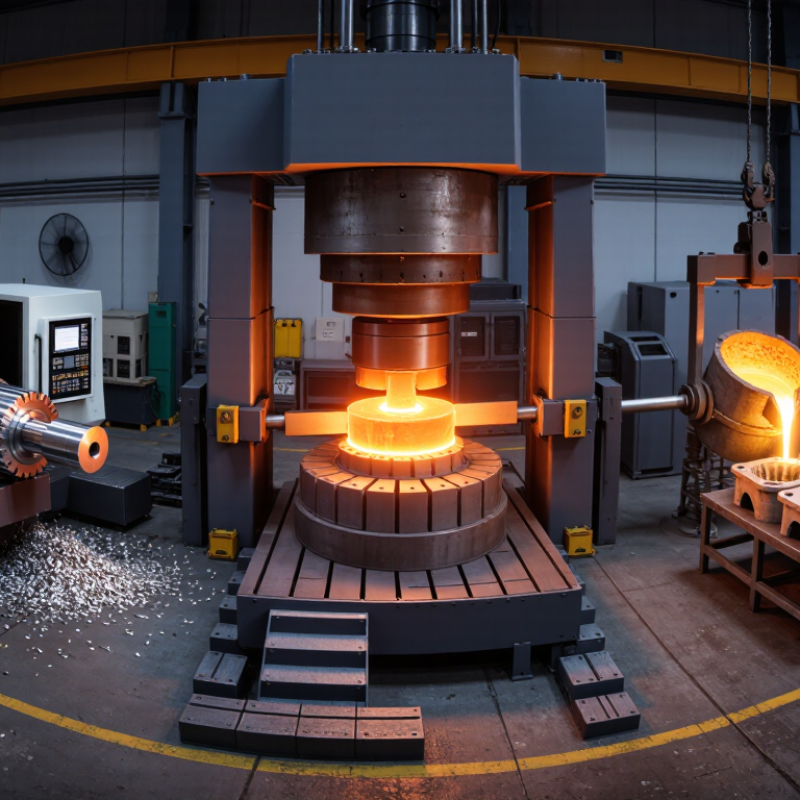
China Top Forging vs Casting vs Machining Differences?

What Forging, Casting, and Machining Mean in Manufacturing

Forging shapes solid metal through compressive force, often between dies. The pressure aligns and deforms the material’s grain structure, making forging useful for highly loaded parts such as crankshafts and connecting rods. Casting works differently: molten metal fills a mold, cools, and takes its shape. It can create complex cavities and large forms, though cooling may leave porosity or uneven structure. Machining removes material from a solid workpiece with cutting tools. A milling cutter can carve a precise slot; a lathe can turn a shaft to a specified diameter. Each process solves a different problem.

The American Foundry Society’s 2022 U.S. Metalcasting Industry Census estimated 2021 industry shipments at $49.6 billion. That figure shows casting’s industrial scale, not that it suits every component. In practice, engineers weigh geometry, production volume, material, tolerances, and finishing needs. Forging may reduce internal defects but requires dedicated dies. Casting offers shape freedom, while machining can achieve close dimensions but creates scrap. Real parts are rarely so tidy. A cast blank may still need extensive machining, and forged parts may need finish cutting.

Tips: Check the part’s load path and critical dimensions before choosing a process. Ask suppliers about tolerances, inspection methods, and expected machining allowance. Compare total production cost, not just the first tooling quote. A small design change can shift the best choice.

Forging vs. Casting vs. Machining: Typical Dimensional Tolerance

Indicative tolerance ranges for steel parts (mm); a smaller tolerance generally means closer dimensional control.

Machining typically provides the tightest tolerances. Actual results vary with part size, alloy, process type, tooling, and inspection method; these ranges are general examples, not guaranteed specifications.

How Each Process Shapes Metal Parts

Forging presses or hammers metal into shape, often while it is hot. The force compresses the material and can align its grain flow with the part. That can help a connecting rod or bracket handle repeated loads. But thin walls and enclosed cavities are harder to form. Forged parts often need trimming and later machining. Shape has limits.

Casting pours molten metal into a mold, where it cools into the cavity’s form. This can make complex housings, ribs, and hollow sections practical. Cooling is not perfectly predictable, though; shrinkage or porosity may weaken local areas. Careful mold design, process control, and inspection matter. Results also depend on alloy and section thickness.

Machining cuts material from bar, plate, castings, or forgings. It creates accurate holes, flat faces, and controlled fits. A machined bearing seat can be precise, even when the rest of the part is cast. However, deep pockets may add time, and more cutting usually means more scrap. Metal becomes chips. The comparison is not perfectly tidy: one part may be cast, then machined, while a forging may need extensive finishing. The best route depends on load, shape, tolerance, and production volume—not just the drawing’s appearance.

China Top Forging vs Casting vs Machining Differences? — How Each Process Shapes Metal Parts

Comparison Dimension Forging Casting Machining
How the part is formed Metal is shaped by compressive force, usually while hot, between dies or under a press or hammer. Molten metal is poured or injected into a mold, where it solidifies into the desired shape. Material is removed from a solid workpiece using tools such as drills, mills, or lathes.
Typical starting material Billets, bars, or preforms made from forgeable metals and alloys. Molten metal, commonly aluminum, iron, steel, copper alloys, or other castable alloys. Metal bar, plate, billet, casting, forging, or other solid stock.
Shape complexity Best suited to solid parts with practical die geometry. Deep recesses and complex internal cavities are generally difficult to form directly. Can produce complex external shapes and internal cavities using mold cores, subject to design and casting constraints. Can create precise surfaces, holes, slots, and profiles that cutting tools can reach; enclosed internal features may be difficult or impossible to machine.
Typical mechanical characteristics Plastic deformation can refine grain structure and produce directional grain flow, often supporting strong, fatigue-resistant parts when properly designed and processed. Properties depend on alloy, solidification, and casting quality. Porosity, shrinkage, or other defects may occur if process control is inadequate. Properties largely reflect the starting material. Cutting removes material but does not, by itself, create the grain flow associated with forging.
Dimensional accuracy and finish As-forged accuracy and finish vary with process, part size, and die design. Critical features commonly receive subsequent machining. Accuracy and finish vary with mold type, alloy, and part size. Some surfaces or dimensions may require machining or finishing. Can achieve close tolerances and fine finishes when the machine, tooling, workholding, and inspection plan are suitable.
Material use and waste Often efficient for near-net-shape parts, although flash, trimming, and machining allowance can create scrap. Can use material efficiently for complex shapes, but runners, gates, risers, and rejected castings may add material use. Typically creates chips because material is cut away; waste can be reduced with efficient stock sizing and chip recycling.
Tooling and setup Requires forging dies and process setup. Tooling cost can be significant, particularly for complex or dedicated dies. Requires a mold and, where needed, cores. Mold and tooling costs vary considerably by casting method and production volume. Requires cutting tools, fixtures, and machine setup. Dedicated fixtures may be needed for repeat production; simpler work can use general-purpose setups.
Production suitability Often attractive for repeat production of load-bearing parts where performance and production rate justify the tooling. Useful for parts with complex shapes, large sections, or features that would be difficult to create from solid stock. Suitable for prototypes, low-volume work, and production parts needing accurately finished features; cycle time depends on material removal and geometry.
Common applications Gears, connecting rods, crankshafts, fasteners, and structural or load-bearing components. Engine housings, pump bodies, valve bodies, machine frames, and components with complex contours or internal passages. Shafts, precision bores, brackets, housings, tooling, and finish-machined features on forged or cast parts.
Main trade-off Strong parts and efficient repeat production can come with higher die costs and limits on shape complexity. Shape flexibility can come with solidification-related risks and variable requirements for inspection and finishing. Dimensional control and design flexibility can come with longer cycle times and material waste for heavily machined parts.
When processes are combined Forgings are often machined afterward to create accurate interfaces, holes, and finished surfaces. Castings are often machined on critical faces, bores, and mating surfaces. Machining is commonly used as a finishing step after forging or casting rather than as a competing process.

Actual performance, cost, tolerances, and suitability depend on the alloy, part geometry, production volume, process controls, and inspection requirements. Process selection should be confirmed with design and manufacturing review.

Key Differences in Strength, Precision, Cost, and Production

Forging shapes heated or cold metal under pressure, aligning its grain flow with the part’s contours. This can improve strength and fatigue resistance in highly loaded components, such as shafts or connecting parts. It is not magic. Poor die design or uneven heating can still create defects, and complex shapes may need extra machining.

Casting pours molten metal into a mold, making it practical for intricate forms, internal cavities, and larger parts. It can reduce material waste and simplify production when geometry is complex. However, porosity or shrinkage may affect strength, so inspection and process control matter. Thin walls and tight tolerances can also be difficult to achieve consistently.

Machining removes material from a solid workpiece, often producing precise dimensions and smooth surfaces. It suits prototypes, low-volume orders, and features that need close tolerances. But cutting away material takes time, and a large amount may become chips. Cost depends on the alloy, setup, cycle time, and order quantity. For a small batch, machining may be sensible; for thousands of identical parts, a forging or casting route can spread tooling costs. The choice is rarely universal. A drawing’s tolerance, load, shape, and expected volume should guide the process—and sometimes, the best part combines more than one method.

How to Choose the Right Process for a Part

Choosing between forging, casting, and machining starts with the part’s job, shape, quantity, and required tolerance. A cast housing can incorporate curved passages that would be difficult to machine from solid stock. A forged load-bearing pin may benefit from directional grain flow and reduced internal porosity. Machining is often practical for prototypes or small batches, especially when a component needs precise bores and flat mounting faces. It can, however, remove substantial material.

Scale matters, but it is not the whole answer. Modern Casting’s 2023 World Casting Census estimated global casting production at 109.7 million metric tons in 2022, including 51.5 million tonnes in China. That volume demonstrates a mature production route; it does not prove casting is best for a particular design. Compare tooling cost, material yield, inspection needs, and finishing work against expected order volume. A complex housing may favor casting, while a simple, highly stressed shaft may justify forging. Not always. I would still request a prototype or process review before committing: drawings can hide awkward tool access, machining allowances, or inspection challenges. A small design change may shift the balance.

China’s Role in Forging, Casting, and Machining Supply Chains

China’s role in forging, casting, and machining rests on a large, connected industrial base. The World Steel Association’s World Steel in Figures 2024 reports that China produced 1,019.1 million tonnes of crude steel in 2023, about 54% of world output. This indicates strong access to steel, but steel volume alone does not prove a supplier can meet a part’s quality requirements. Buyers still need to check material certificates, process controls, and inspection records.

The processes serve different needs. Forging shapes heated metal under pressure, often making it suitable for load-bearing shafts and connecting parts. Casting pours molten material into a mould, which can form complex housings with internal cavities. Machining removes material to achieve precise dimensions, such as a smooth bearing seat. In China, these steps may sit within one region or across several suppliers, alongside heat treatment and finishing. Coordination matters. Honestly, lead times can become harder to predict when each stage has a different schedule; this is easy to underestimate.

Tips: Share drawings, material grades, tolerances, and annual volume before requesting quotes. Ask who performs each process and how dimensional checks are recorded. A low unit price is not the whole story. Review sample parts and confirm how changes are approved before production begins.

FAQS

How does forging shape a metal part?

A press or hammer compresses metal, sometimes while it is hot. The force can align grain flow with the part. Shape has limits.

When is forging a useful choice?

It can suit loaded parts, such as shafts or connecting rods, that face repeated stress. Poor heating or die design can still cause defects.

What kinds of parts can casting produce?

Molten metal cools inside a mold, which can form ribs, housings, and internal cavities. Results depend on alloy and wall thickness.

What are common challenges with casting?

Shrinkage or porosity can weaken local areas. Careful mold design and inspection matter. Not always predictable.

Why choose machining?

Cutting can create accurate holes, flat faces, and smooth bearing seats. It is useful for prototypes and parts with tight tolerances.

Can machining increase material waste?

Yes. Deep pockets take time, and removed metal becomes chips. Setup and cycle time affect cost, too.

Which process is usually cheaper?

It depends on part shape, alloy, quantity, and tooling. Machining may suit a small batch; tooling costs may spread across thousands of cast or forged parts.

Can a part use more than one process?

Yes. A casting may be machined afterward to create a precise fit. The best route is not always obvious.

Conclusion

Forging, casting, and machining are three distinct ways to make metal parts. Forging shapes heated or sometimes cold metal through pressure, helping create a dense structure suited to demanding loads. Casting pours molten metal into a mold, making it practical for complex shapes and larger components. Machining removes material from a solid workpiece with cutting tools to achieve precise dimensions and surface finishes. Understanding what is the difference between forging casting and machining begins with how each process forms a part.

Their strengths, accuracy, cost, and production suitability vary. Forging can offer high strength but may require specialized tooling; casting accommodates intricate designs, though the result depends on the alloy and process controls; machining provides precision but can create more material waste and take longer for complex parts. Choosing the right method means weighing part geometry, performance needs, tolerances, order volume, and budget. China’s manufacturing supply chains include capabilities in all three processes, allowing buyers to compare production options and select a suitable approach for their requirements.

Isabella

Isabella

Isabella is a dedicated marketing professional with a sharp focus on driving brand growth and engagement through strategic content creation. With an extensive background in digital marketing, she combines her passion for storytelling with her keen understanding of industry trends to deliver......