When considering how to select between casting and machining processes for your project, several factors come into play. Casting and machining are two pivotal manufacturing techniques in various industries. According to a report by MarketsandMarkets, the global casting market is projected to reach USD 246 billion by 2026, showcasing its growing significance.
Each process has distinct advantages and disadvantages. Casting can produce complex shapes and is generally less expensive for large parts. However, precision may be compromised, leading to potential inefficiencies. Machining, on the other hand, provides high precision and surface finish. Yet, it can be costly, especially for complex geometries. A study from the American Society of Mechanical Engineers (ASME) emphasizes the importance of material selection and production volume, affecting the decision-making process.
Ultimately, the choice between casting and machining is not always clear. Time constraints, cost considerations, and part specifications make the decision complex. By analyzing these elements, companies can better navigate the intricate landscape of manufacturing processes, ensuring they meet project requirements effectively.
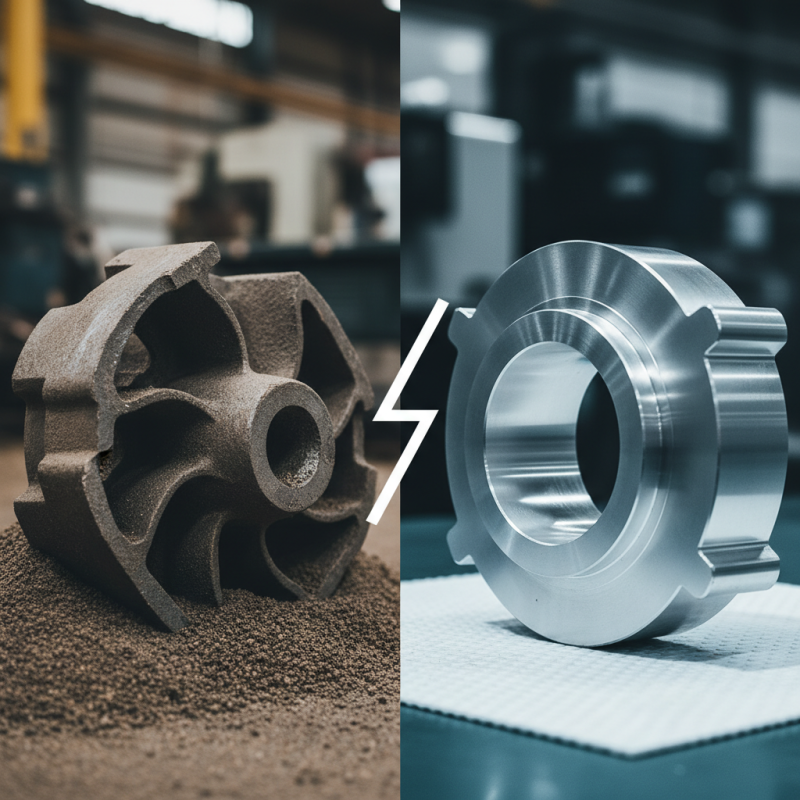
Overview of Casting and Machining Processes
Casting and machining are two prevalent manufacturing processes. Each serves unique purposes and offers distinct advantages. Casting involves pouring molten material into a mold, allowing it to solidify into the desired shape. This method excels in creating complex geometries and intricate designs. It's efficient for high-volume production and offers good material yields. However, achieving precise dimensions can be a challenge. The quality of the mold and the cooling process can impact the final product.
On the other hand, machining entails removing material from a solid block to achieve the final shape. This process provides high precision and excellent surface finishes. It is ideal for producing parts with tight tolerances. However, machining can be wasteful, as it subtracts material rather than adding it. This often leads to higher costs, especially for large parts. Many manufacturers face the dilemma of choosing between these methods based on their project needs and budget. Balancing cost-effectiveness with quality is essential in this decision-making process.
Why Choose Casting or Machining Processes for Your Project? - Overview of Casting and Machining Processes
| Process Type |
Description |
Advantages |
Disadvantages |
Applications |
| Casting |
A manufacturing process where liquid material is poured into a mold. |
Complex shapes; large parts; reduced waste. |
Longer cycle times; potential for defects. |
Automotive parts; sculptures; industrial equipment. |
| Machining |
A subtractive manufacturing process that removes material to shape an object. |
High precision; good surface finish; flexible design. |
Material waste; slower production for bulk parts. |
Aerospace components; medical devices; intricate parts. |
Advantages of Choosing Casting for Your Project
Casting is a preferred process for various industrial applications. It allows for complex shapes that are difficult to achieve with traditional machining methods. According to industry reports, nearly 70% of all metal manufacturing utilizes casting techniques. This statistic underscores the technique's efficiency and versatility.
The casting process offers significant cost advantages. It can reduce both material waste and production time. A study by the Metal Casting Institute notes that casting can save up to 30% in production costs compared to machining. These savings often result from the ability to create near-net shapes, minimizing the need for extensive post-processing. Additionally, casting materials generally have higher strength-to-weight ratios. This can enhance the performance of fabricated parts.
While casting has clear benefits, it is not without challenges. The quality of the final product relies heavily on the initial mold design and material selection. Any flaws during the casting process can lead to defects in the finished product. Continuous monitoring and quality control are vital to mitigate these risks. Therefore, partnering with experienced foundries is essential for a successful project. Understanding these nuances can significantly impact the decision-making process.
Benefits of Selecting Machining over Casting
When considering the benefits of machining over casting, precision is a crucial factor. Machining allows for tighter tolerances and greater accuracy in shaping materials. This can dramatically improve the final product's performance and fit. For projects that require intricate designs and complex features, machining delivers results that casting may not achieve.
Another advantage is material versatility. Machining works on various metals and plastics, adapting to specific project needs. Unlike casting, which may be limited by the material's properties, machining can also remove excess material. This process brings out unique characteristics of the chosen material, enhancing overall quality. The finished product can often showcase clearer details and better surface finishes than cast components.
However, machining can be resource-intensive. The equipment and skilled labor required often lead to higher costs. Projects with budget constraints may find casting more appealing initially. It's essential to weigh the long-term benefits of quality and performance against upfront expenses. Understanding your project's specific needs helps determine if machining is the right choice, even when facing challenges.
Benefits of Selecting Machining over Casting
Factors to Consider When Choosing Between Casting and Machining
When selecting between casting and machining processes, several factors come into play. Understanding the production volume is essential. For high-volume production, casting can significantly reduce costs. According to industry reports, casting can be up to 30% cheaper than machining for large batches. However, for low-volume runs, machining might be more economical despite higher per-piece costs. The complexity of the part is another critical consideration. Castings can create complex geometries that are difficult to machine.
Material properties also guide the decision. Casting is often limited to certain materials and may not achieve the precise tolerances that machining allows. Reports suggest that machined components typically have a tighter tolerance, around ±0.005 inches, compared to castings, which may range from ±0.010 to ±0.020 inches. This difference is crucial for applications requiring strict specifications.
Tips: Always assess the required tolerances for your project. If high precision is essential, opt for machining. On the other hand, if your project includes intricate designs, casting might be the way to go. Consider material availability as well. Some materials may be more suited to one process over the other, impacting overall performance.
Applications Best Suited for Casting and Machining Techniques
Casting and machining processes are vital in various industries. They cater to different project needs. For heavy machinery, casting is common. This process allows for complex shapes with minimal wasted material. The Global Casting Market Report (2022) estimates a growth rate of 4.5%, highlighting its significance in construction and automotive sectors. Smooth finishes aren't always achievable with casting, which might require additional machining.
On the other hand, machining excels in precision parts, like medical instruments or aerospace components. According to industry analysis, machining contributes to 70% of manufacturing processes in these fields. The accuracy of a CNC machine can reach tolerances as low as 0.001 inches. Yet, machining can be more costly due to higher material removal rates and longer lead times.
Tip: Evaluate your project's specific requirements. Consider dimensions, tolerances, and budget before choosing a process. Some projects might benefit from a hybrid approach, combining both techniques for optimal results. Always assess whether the initial method can meet your expectations in quality and cost-efficiency.
FAQS
: Casting allows for complex shapes and reduces material waste. It is also cost-effective, saving up to 30% compared to machining.
Casting can expedite production by creating near-net shapes, which minimizes the need for extensive post-processing.
The final product's quality depends on mold design and material selection. Flaws during casting can produce defects.
Continuous monitoring ensures defects are caught early. Partnering with experienced foundries can mitigate risks.
Opt for casting for high-volume production and complex geometries. It can be cheaper and yield intricate designs.
Yes, casting is often limited to certain materials and may not achieve high precision tolerances found in machining.
Consider material availability and suitability for each process. Some materials work better with casting than machining.
Machined components typically have tighter tolerances, around ±0.005 inches, while castings range from ±0.010 to ±0.020 inches.
Not necessarily. For low-volume runs, machining may be more economical despite higher per-piece costs.
Assess your project’s required tolerances and complexity. Reevaluate the best approach based on these factors.
Conclusion
When deciding how to select between casting and machining processes for your project, it's essential to understand the unique characteristics and advantages of each method. Casting offers benefits such as the ability to create complex shapes and potentially lower costs for high-volume production. On the other hand, machining is favored for its precision and the ability to work with a variety of materials, which can be critical for applications requiring tight tolerances.
Factors to consider include the specific application of the parts, production volume, material properties, and cost implications. Each process has its ideal applications, with casting being suitable for large, intricate components, while machining excels in producing high-precision parts. Understanding these elements will guide you in making an informed decision that best aligns with your project requirements.

 HYDRA CNC