Why Choose the Best Process for Complex Parts?

Time:2026-09-26 Author:Charlotte
0%

Complex parts rarely fit a one-process answer. A thin wall, deep pocket, tight bore, or hidden undercut can change the best route from machining to casting, molding, additive manufacturing, or a hybrid approach. The choice affects more than geometry. It shapes material use, lead time, inspection effort, and the cost of correcting defects. Small details matter. A part that looks simple in a CAD model may demand multiple setups, custom fixturing, or difficult finishing on the shop floor.

The business case for careful process selection is growing. Deloitte’s 2024 Smart Manufacturing Survey reported that 86% of surveyed manufacturers expected smart manufacturing to become a primary driver of competitiveness within five years. That finding is broader than complex-part production; it does not prove that one process is best. It does show why digital planning and production data increasingly matter. To understand how to choose the best process for complex parts, engineers should compare functional requirements with real shop capabilities: tolerances, material behavior, batch size, surface finish, and inspection access. A five-axis machine may reach an angled feature, but its setup and tool access still need review. Additive manufacturing may create internal channels, yet support removal and finishing can add work. No process is automatically superior. Even a carefully modeled choice can miss a supplier’s practical limits, so early manufacturing review remains essential.
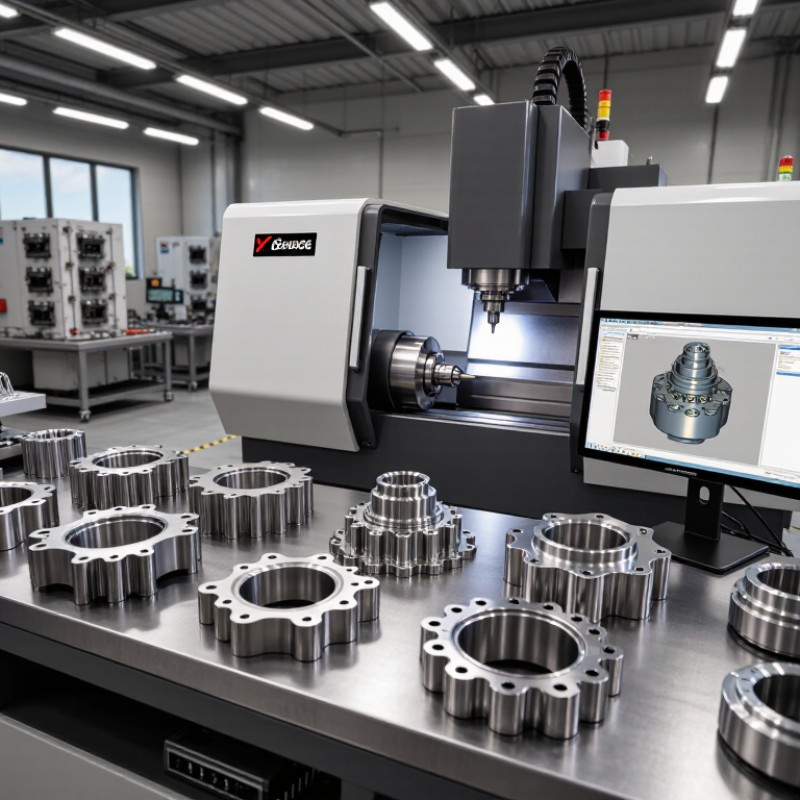
Why Choose the Best Process for Complex Parts?

What Defines a Complex Part in Manufacturing?

A complex part is not defined by appearance alone. It is a component whose geometry, tolerances, material, or production requirements make consistent manufacturing difficult. A plain-looking bracket can be challenging if several mounting faces must align within tight limits. A sculpted housing may be easier if its surfaces allow straightforward tool access.

Look closely at the details. Deep pockets, thin walls, tiny holes, and internal channels can limit how a tool reaches the workpiece. Tight tolerances may require stable fixturing and careful measurement at multiple stages. Material matters, too: a heat-sensitive plastic behaves differently from a hard alloy during cutting. Every choice affects the next. That matters.

Complexity also depends on production volume and inspection needs. A process that suits a handful of prototypes may become slow or costly for thousands of parts. Engineers should consider setup time, achievable precision, finishing, and how each feature will be checked. Sometimes a design can be simplified without losing its function. Not always. The difficult part is deciding which details truly matter, then matching the manufacturing process to them. A drawing may look complete, yet unclear datums or unrealistic tolerances can still lead to inconsistent results.

Which Factors Guide Process Selection?

Choosing a process for a complex part starts with its job, not its shape alone. Identify the material, load, operating temperature, and required service life. Then check the tightest tolerances, surface finish, and features such as thin walls or deep channels. A milled aluminum housing may suit a low-volume run, while a molded component may become economical at higher volumes. The best choice depends on the full production plan.

The 2024 Wohlers Report estimates that the additive manufacturing industry reached $20.035 billion in 2023, an 11.1% increase over 2022. That growth shows expanding use, not automatic suitability for every part. Build orientation, support removal, inspection, and post-processing can add cost or affect precision. Compare prototype and production requirements separately. A process that makes a striking sample may struggle to deliver repeatable dimensions at scale. Cost estimates can also miss setup time; that deserves a second look.

Tips Ask suppliers for a sample part and a documented inspection plan. Check critical dimensions on the actual material and finish. For a thin channel or threaded hole, confirm how it will be measured and cleaned. Record acceptable tolerances before requesting quotes. Small detail, big difference.

How Do Manufacturing Processes Compare for Complex Parts?

Complex parts do not point to one obvious manufacturing process. CNC machining can hold tight dimensions on accessible faces, and it works well for prototypes or small batches. But a deep internal channel may need special tooling, extra setups, or a different design. Material waste can also rise when a part is cut from a solid block.

Additive manufacturing can build enclosed passages and lightweight lattice features that are difficult to machine. The trade-off is that supports, surface finishing, and build orientation affect the result. A narrow channel may look clean in a model yet prove hard to inspect or clear of powder. That matters. Casting can create flowing shapes with less machining, though shrinkage and draft angles need careful control.

For larger production runs, injection molding may spread tooling costs across many parts. It can deliver consistent output, but the mold constrains geometry and changes are costly. I would not call any process universally best; that sounds tidy, but it hides the real trade-offs. Compare part quantity, material, tolerances, access for inspection, and finishing needs. Then test a representative feature before locking the design. One awkward detail can change the choice.

How Does the Right Process Affect Quality, Cost, and Lead Time?

Choosing a process for a complex part starts with its real job, not just its drawing. A machined aluminum housing may hold a bearing bore accurately, but deep pockets can add hours of tool time. Thin walls may also vibrate during cutting. An additive prototype can check fit quickly, yet it may not match the strength or surface finish of a production part. That distinction is easy to miss.

Quality depends on whether the process can repeatedly meet the critical features. For a cast part, a bearing seat might need machining afterward. Clear datums and inspection points help verify that it stays aligned. A process that looks precise on paper can still struggle with a hard-to-reach surface. I would treat the first article as useful evidence, not a promise that every later part will be identical.

Cost includes more than the price of one part. CNC machining may suit a small batch, while dedicated tooling can lower unit cost at higher volumes. Lead time also depends on material availability, machine queues, finishing, and inspection. A quick operation can sit idle while waiting for another step. Ask for a schedule that names these stages. The cheapest quote is not always the least expensive choice if rework or delays follow.

How Is the Selected Process Validated and Optimized?

A complex part needs more than a promising first sample. Validation should check whether the chosen process repeatedly meets drawing tolerances, surface requirements, and material expectations. Measure critical features with suitable equipment, such as a coordinate measuring machine for intricate geometry. Record the setup, tool condition, and inspection results. One sample proves little. A small pilot run can reveal variation that a single part hides.

Tips: Mark the features that matter most. Measure them at several points, and keep the same inspection method across trials. Check the measuring equipment too; inconsistent readings can mislead process decisions.

When results drift, change one process variable at a time, such as feed rate, fixture position, or cutting depth. Then repeat the run and compare the measurements. Look for patterns, not just isolated failures. A burr on one edge may point to tool wear or clamping movement, but it may also have another cause. We sometimes want to adjust too quickly. Pause, review the evidence, and document what remains uncertain. Keep the validated settings and inspection records available for future production.

FAQS

What should guide process selection for a complex part?

Start with the part’s job, material, expected loads, operating temperature, and service life. Shape alone is not enough.

How do tolerances and geometry affect the choice?

Check tight dimensions, surface finish, thin walls, deep channels, and threaded holes. Small details matter.

When might milling or molding make more sense?

A milled aluminum housing may suit a small run. Molding may become more economical at higher volumes.

Does additive manufacturing suit every complex part?

No. Supports, build direction, inspection, and finishing can add cost or affect precision. A striking sample may not scale well.

What should a supplier provide before production?

Ask for a sample part and a documented inspection plan. Confirm how critical features will be measured and cleaned.

How can a process be validated?

Measure key features against drawing tolerances and material requirements. A coordinate measuring machine can help with intricate geometry.

Why run a pilot instead of checking one part?

One sample proves little. A small pilot run can reveal variation that a single part hides.

What should happen when measurements drift?

Change one variable, such as feed rate or fixture position, then repeat the run. Look for patterns before deciding on a fix.

What records are useful for future production?

Keep validated settings, inspection results, and equipment checks. Inconsistent readings can mislead decisions; I may be underestimating that risk.

Conclusion

Choosing the best process for complex parts begins with understanding what makes a part challenging: intricate geometry, tight tolerances, demanding material properties, or multiple functional features. The right choice depends on how these requirements interact with production volume, available equipment, material behavior, finishing needs, and budget. Comparing processes such as machining, casting, forming, and additive manufacturing helps reveal their strengths and limitations for a specific design rather than suggesting one solution fits every part.

Knowing how to choose the best process for complex parts can improve dimensional accuracy, surface quality, production cost, and delivery time. A suitable process may reduce extra operations and material waste, while a poor match can create defects, delays, or unnecessary expense. Before full production, validate the selection with prototypes, inspections, and performance tests. Use the results to refine the design, process settings, and quality controls so the final method reliably meets functional and manufacturing requirements.

Charlotte

Charlotte

Charlotte is a seasoned marketing professional with a deep understanding of the company's portfolio and a passion for elevating its presence in the market. With a keen eye for detail and a commitment to excellence, she ensures that our professional blog is regularly updated with insightful articles......