In the casting industry, understanding "what are the common defects in casting processes" is crucial for quality control and efficiency. Experts estimate that over 70% of casting defects stem from issues like shrinkage, porosity, and misruns. As Mark Johnson, a senior engineer at Precision Castings, states, "Recognizing these defects is the first step toward mitigating them." His insight highlights the necessity of addressing these flaws to improve productivity.
The economic impact of casting defects can be significant. According to a report by the American Foundry Society, poor casting quality can lead to annual losses exceeding $5 billion across the industry. Such figures reveal a pressing need for manufacturers to deeply understand and address these common issues. Moreover, operators must reflect on their processes, as small oversights can lead to major defects.
Preventative measures are essential in overcoming these challenges. However, achieving zero defects remains a daunting task. Continuous improvement must be prioritized, and feedback from past experiences can help in this endeavor. As the industry evolves, it is clear that a dedicated focus on defect prevention will enhance overall casting quality and operational efficiency.
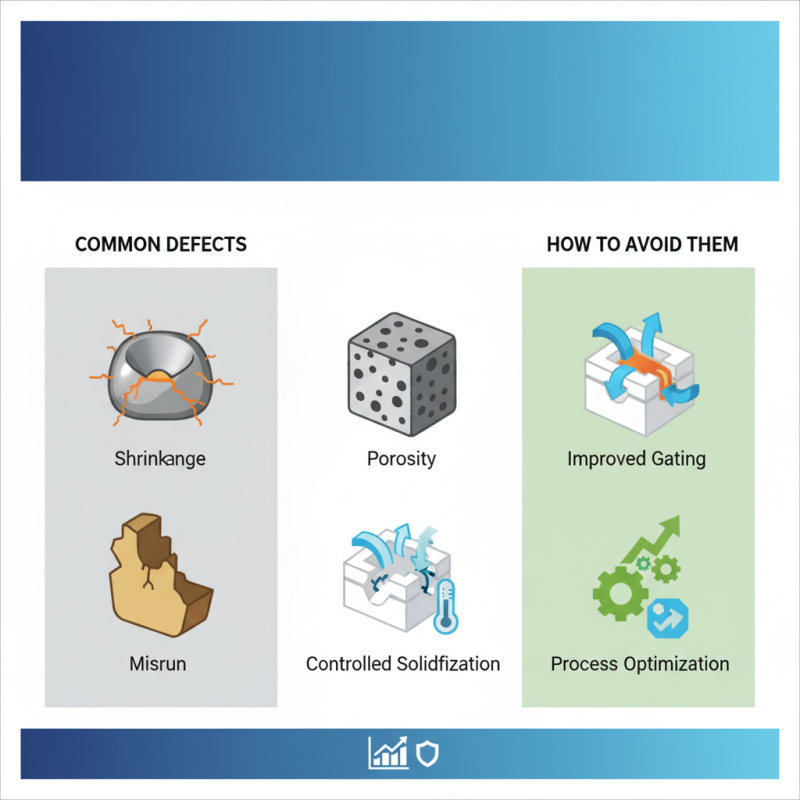
Common Types of Defects in Casting Processes and Their Causes
Casting processes can encounter several types of defects, impacting the quality of the final product. One common defect is
porosity, which manifests as tiny holes in the material. This occurs when gases become trapped during the solidification process.
Effective measures include optimizing gas venting and controlling pouring temperatures.
Detecting and addressing porosity early is vital for maintaining product integrity.
Another prevalent issue is
shrinkage cavities. They form when metal contracts during cooling, creating voids within the workpiece.
To minimize shrinkage,
proper mold design is essential. Runners and risers must be strategically placed to allow for adequate metal flow and compensation for volume loss.
Additionally, selecting the right alloy can influence the vulnerability to shrinkage.
Inclusion of foreign materials is also a frequent concern, which can weaken the casting. This issue often arises from
contamination during the melting process.
Regular cleaning of equipment and using high-quality raw materials are crucial steps to reduce inclusions. While these solutions are effective,
constant monitoring and adjustments are necessary.
There’s always a risk of defects, and learning from past casting cycles is key to improvement.
Impact of Material Selection on Casting Quality and Defect Prevention
Material selection plays a crucial role in casting quality. Different materials can significantly impact the final product's properties. For instance, using alloys with proper compositions can enhance durability and reduce defects. However, not all materials are compatible with every casting process. Understanding the specific needs of a project is vital.
To avoid common defects, consider the melting temperature of the selected material. Variations in temperature can lead to inconsistent pouring, which increases the likelihood of defects such as shrinkage or voids. Choose materials that have a suitable melting point for the casting technique used. Conduct thorough research on material behavior during the casting process.
Tips for selection: Always assess the mechanical properties of the materials. This includes tensile strength and ductility. They influence how the material behaves when cast. Check for any past failures linked to material choices. Learning from previous projects can guide current selections. Another tip is to collaborate with material experts. Their knowledge can provide invaluable insights and prevent costly mistakes.
Common Casting Process Defects and How to Avoid Them
| Defect Type |
Description |
Causes |
Prevention Strategies |
| Porosity |
The presence of voids or holes in the casting due to trapped gas. |
Improper gas venting, rapid cooling, or contamination in the mold. |
Ensure proper venting, control cooling rates, and use clean materials. |
| Hard Spots |
Localized areas with excessive hardness, often causing machining issues. |
Improper alloy composition or uneven cooling. |
Use consistent material composition and control the cooling process. |
| Shrinkage Defects |
Deformations that occur as the metal cools and solidifies. |
Inadequate feeding during solidification. |
Design thicker sections or risers to allow proper feeding of molten metal. |
| Mold Cracking |
Cracks in the mold leading to surface imperfections. |
Excessive thermal stress or poor mold material selection. |
Choose appropriate mold materials that can withstand temperature variations. |
| Surface Defects |
Irregularities on the surface of the casting, such as roughness or pits. |
Contamination, sand erosion, or inadequate molding techniques. |
Maintain clean working environments and review molding practices. |
| Cold Shut |
A defect where two streams of molten metal do not fuse properly. |
Low pouring temperature or improper gate design. |
Optimize pouring temperature and gate design to ensure proper flow. |
The Role of Temperature Control in Reducing Casting Process Defects
Temperature control is crucial in the casting process. Proper management can significantly reduce defects like shrinkage, porosity, and misruns. Reports indicate that temperature fluctuations account for up to 30% of casting failures. This statistic highlights the need for vigilant monitoring throughout the process.
Maintaining consistent molten metal temperatures helps ensure even cooling. When temperatures drop too quickly, cracks may form, leading to high defect rates. Using thermal imaging can help identify hot and cold spots in real-time. Advanced temperature control systems can monitor conditions and adjust automatically, producing higher-quality casts.
Tips for better temperature management:
- Monitor melting temperature closely and regularly.
- Use insulated ladles to maintain heat during transfer.
- Implement gradual cooling techniques to reduce stress.
Reflecting on these practices can lead to fewer defects. Understanding that variability in temperature can influence outcomes is essential for quality improvement. Adopting rigorous temperature control methods can turn a good casting process into a
great one.
Identifying and Mitigating Defects Through Effective Mold Design
Effective mold design is crucial for minimizing casting process defects. A significant percentage of defects, estimated at around 60%, stem from inadequacies in the mold itself. When mold temperatures are not controlled properly, issues like warping and shrinkage occur. These defects compromise product quality and increase production costs.
To mitigate defects, attention must be focused on cooling channels and their placement. Research shows that optimized cooling can reduce cycle times by 30%. Furthermore, selecting the right mold materials can enhance durability and performance. It is also essential to consider the design for ease of maintenance. Complex designs may lead to difficulties in repairs, potentially resulting in extended downtimes.
Despite advancements in technology, defects persist. Designers often overlook critical factors during the planning phase. This oversight can have severe implications, such as increased scrap rates. Industry data indicates that up to 50% of casting defects can be traced back to poor design practices. Continuous improvement and regular assessments can help in identifying these shortcomings. Prioritizing a thorough evaluation process leads to better outcomes and reduced defect rates.
Techniques for Quality Control in Casting to Minimize Defects
In casting, achieving high-quality results is crucial. Quality control techniques are essential to minimize defects. According to a 2022 industry report, approximately 30% of castings have defects. Common issues include porosity and misalignment, which can compromise the structural integrity of components.
Implementing techniques such as rigorous mold design review can significantly enhance casting quality. Using advanced simulation tools can predict potential failures before production. This proactive approach not only saves time but also reduces rework costs. Studies suggest that 25% of defects arise from poor mold design.
Tips:
- Monitor cooling rates carefully to avoid thermal stresses.
- Regular inspections during the pouring process can catch issues early.
- Additionally, training staff on defect recognition can bolster overall quality.
- Ensuring that every team member understands the importance of their role is key.
- Redesigning processes based on feedback can lead to continuous improvement.
Conclusion
In the casting industry, understanding what are the common defects in casting processes is essential for improving product quality. Common defects include issues such as porosity, shrinkage, and misruns, which often stem from factors like improper material selection and inadequate temperature control. By choosing appropriate materials and maintaining optimal temperatures, manufacturers can significantly reduce the incidence of these defects.
Effective mold design plays a crucial role in identifying and mitigating defects by ensuring proper flow and cooling of the molten material. Additionally, implementing robust quality control techniques allows for early detection and correction of potential issues, further minimizing defects in the final product. By focusing on these areas, casting processes can be optimized to enhance overall manufacturing efficiency and output quality.

 HYDRA CNC