A supplier’s certificate can open a buyer’s door, but it cannot replace dependable work on the factory floor. Purchasing teams often ask, “what certifications are important for manufacturing suppliers?” The answer depends on the products, risks, and customer requirements involved. A metal-parts shop serving automotive customers may need different evidence from a supplier making aircraft components. The details matter.
W. Edwards Deming, the statistician and quality-management expert, urged organizations to “Improve constantly and forever the system of production and service.” That principle helps explain why certification should reflect daily practice, not just a framed document. ISO 9001 provides a widely used quality-management framework. ISO 14001 addresses environmental management, while ISO 45001 focuses on occupational health and safety. Automotive suppliers may encounter IATF 16949 requirements; aerospace suppliers may be asked about AS9100. Customer and industry expectations vary.
A useful supplier review starts with scope: which facility, processes, and products does the certificate cover? Check its validity and confirm that the stated scope matches the work being quoted. Then look beyond the paperwork. Can the supplier trace a batch, explain how it handles a defect, and show calibration records for a measuring tool? These practical signs make the certificate more meaningful. Still, certification is not a guarantee of flawless products or delivery. Buyers should also assess capability, performance history, and communication. The uncomfortable part is that certificates can create false confidence when nobody checks the underlying process. That deserves a second look.
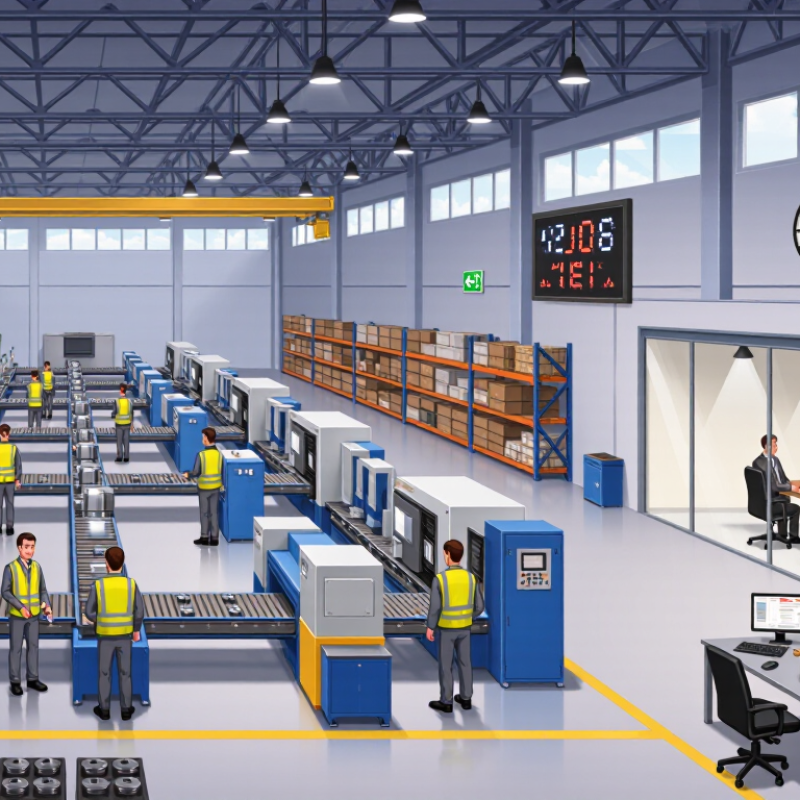
Manufacturing buyers rarely treat a certificate as a box to tick. They want evidence that a supplier can control quality, manage risk, and deliver consistently. A quality management certification, such as ISO 9001, may support that assessment. But buyers in automotive, aerospace, or medical supply chains can require additional standards, audits, or documented controls. Requirements vary by product and contract.
Regulatory needs add another layer. Environmental and workplace safety certifications can show that a supplier follows structured processes, but they do not prove compliance with every applicable rule. A buyer may still request material declarations, inspection records, or traceability for each production lot. Keep those records easy to retrieve. A missing calibration log can delay approval, even when the certificate is current.
The useful question is not, “Which certification is most impressive?” It is, “Which evidence does this buyer need, and what risks must we control?” Map each customer requirement to a process owner, record, and review schedule. Check expiration dates before a bid, not during onboarding. A certificate can still leave gaps. Suppliers sometimes overlook small differences between a general quality system and a customer’s exact process requirements. A short internal gap review can expose those differences before an audit or shipment.
| Certification or Standard | What It Covers | Manufacturing Suppliers It Commonly Applies To | How It Aligns with Buyer Needs | Regulatory Relevance and Important Limits | What Buyers May Verify |
|---|---|---|---|---|---|
| ISO 9001 Quality management systems |
Quality processes, customer focus, risk-based thinking, operational controls, performance evaluation, and continual improvement. | Suppliers across sectors, including machining, fabrication, assembly, packaging, and general industrial production. | Provides a widely recognized framework for consistent processes, traceability, corrective action, and managing customer requirements. | It is a management-system standard, not a product approval or a guarantee that every product meets a particular specification. Certification does not by itself demonstrate compliance with all applicable laws. | Certificate scope, site coverage, current status, audit history where available, and whether the certified scope includes the supplied processes. |
| IATF 16949 Automotive quality management systems |
Automotive quality-system requirements built on ISO 9001, with additional requirements for areas such as defect prevention, supply-chain controls, and production consistency. | Organizations producing production parts or service parts for the automotive supply chain, subject to applicable eligibility and customer requirements. | Helps automotive buyers assess suppliers against sector-specific quality-system expectations and manage risks across production and the supply chain. | It is not a substitute for product, vehicle, or legal approvals. Customer-specific requirements and applicable automotive regulations still apply; certification expectations depend on the supplier’s role and the buyer. | Certificate validity and scope, manufacturing locations, product or process coverage, and applicable customer-specific requirements. |
| AS9100 Aerospace quality management systems |
Quality-management requirements for aviation, space, and defense organizations, including additional controls for areas such as configuration management, product safety, and risk. | Aerospace and defense manufacturers, including suppliers of components, materials, and production services. | Supports buyers seeking controlled processes, documented traceability, risk management, and consistent oversight of products and suppliers. | Certification does not automatically authorize a supplier to produce every aerospace product or satisfy every customer or government requirement. Contract, export-control, and product-specific obligations may apply separately. | Certificate scope and sites, product and process coverage, traceability practices, and any contract-specific approvals or flow-down requirements. |
| ISO 13485 Medical-device quality management systems |
Quality-system requirements for organizations involved in the design, production, installation, or servicing of medical devices and related services, as applicable to their activities. | Medical-device manufacturers and relevant component, contract manufacturing, packaging, and service suppliers. | Helps buyers evaluate documented controls for production, supplier management, traceability, risk-related processes, and handling of nonconforming product. | It does not itself authorize a device for sale or replace applicable jurisdictional regulatory requirements, product conformity assessments, or market-specific registrations. | Certificate scope, covered sites and activities, supplier controls, traceability, and how the supplier supports the buyer’s applicable regulatory obligations. |
| ISO 14001 Environmental management systems |
Processes for identifying and managing environmental aspects, setting objectives, monitoring performance, and meeting applicable compliance obligations. | Manufacturers seeking a structured approach to environmental impacts, including energy use, waste, emissions, and resource management. | Helps buyers assess whether a supplier manages environmental risks systematically and supports supply-chain sustainability programs. | Certification does not prove that an organization has no environmental impacts or that it complies with every environmental law. Legal compliance must be assessed separately. | Certificate scope and sites, environmental objectives, relevant performance information, and evidence of processes for identifying compliance obligations. |
| ISO 45001 Occupational health and safety management systems |
A framework for managing workplace health and safety risks, worker participation, operational controls, and continual improvement. | Manufacturers with production, warehousing, maintenance, or other workplace safety risks. | Can help buyers evaluate a supplier’s systematic approach to worker safety and operational risk management. | It does not guarantee that incidents will not occur or replace workplace health and safety laws, inspections, or other legal duties. | Certificate scope and sites, safety-risk processes, incident and corrective-action practices, and relevant legal-compliance procedures. |
| ISO/IEC 17025 Testing and calibration laboratory competence |
Requirements for laboratory competence, impartiality, and consistent operation of testing and calibration activities. | In-house or independent laboratories that test materials, products, or processes, or perform calibration activities. | Helps buyers assess whether test or calibration results are technically reliable for the activities within the laboratory’s recognized scope. | Laboratory accreditation is distinct from management-system certification. Accreditation applies to a defined scope and does not automatically cover every test or measurement the laboratory offers. | Accreditation status, accrediting body, scope, methods, measurement ranges, and whether the required test or calibration is included. |
| ISO 50001 Energy management systems |
A structured approach to establishing energy objectives, measuring energy performance, and improving energy use and efficiency. | Energy-intensive manufacturing facilities and suppliers whose buyers include energy performance in sustainability or operational programs. | Provides a framework for managing energy performance and demonstrating a repeatable approach to energy improvement. | It does not certify a specific energy-saving result or establish compliance with every energy-related legal requirement. | Certificate scope and site coverage, energy-performance indicators, objectives, and evidence of ongoing monitoring and improvement. |
The survey reported 529,853 valid certificates worldwide. This shows broad adoption, not equal performance at every site.
No. It indicates a structured system, but real results depend on daily practices. A labeled waste bin helps only when staff use it correctly.
Confirm its scope, validity, site, and covered activities. Ask for measurable examples, such as lower energy use or reduced production scrap.
Relevant controls include defect prevention, process monitoring, traceability, and supplier oversight. Buyers can check whether component lots link to inspection records.
Review risk controls, configuration records, product safety practices, and change management. For example, confirm the current drawing reaches production and inspection teams.
Consider customer requirements, product risk, process complexity, and actual work performed. A coating process may need closer environmental controls than a simple machining task.
Connect instructions to specific tasks, such as checking a gauge before a production run. Keep forms accessible and practical. That part is easy to overlook.
Identify the cause, assign corrective actions, and check whether the problem returns. A closed finding is not always a solved problem.
Review sample records, speak with staff, and trace a job from incoming material to shipment. Check key controls again after equipment or staffing changes. Some gaps may remain.
Manufacturing supplier certifications help demonstrate that a company can meet buyer expectations, manage consistent processes, and address relevant regulatory and operational requirements. For organizations asking what certifications are important for manufacturing suppliers, ISO 9001 is a widely recognized quality management standard, while ISO 14001 focuses on environmental management. The 2022 ISO Survey reported 1,265,216 valid ISO 9001 certificates and 529,853 valid ISO 14001 certificates, illustrating the broad adoption of these frameworks.
Some industries also require specialized standards. IATF 16949 is tailored to automotive quality management, whereas AS9100 addresses quality requirements in aerospace. Choosing a certification should reflect a supplier’s markets, products, customer requirements, and internal priorities. Implementation involves documenting processes, assigning responsibilities, training staff, and addressing gaps. Regular audits then help verify that practices match documented procedures and that the management system continues to improve. Maintaining certification is an ongoing commitment rather than a one-time achievement.

 HYDRA CNC