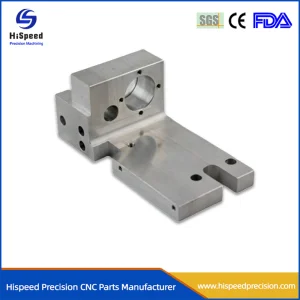
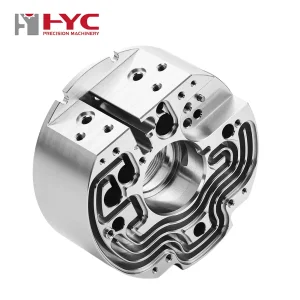
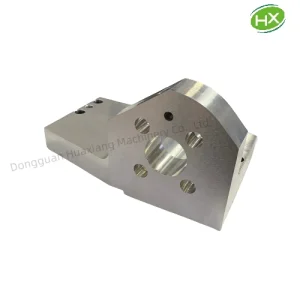
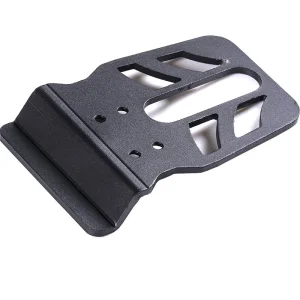
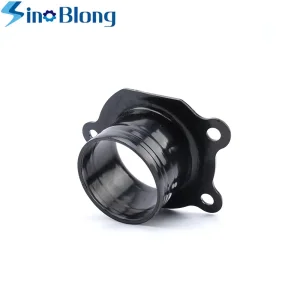
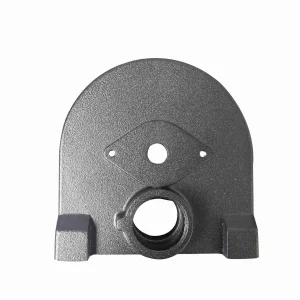
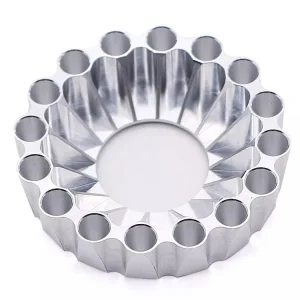
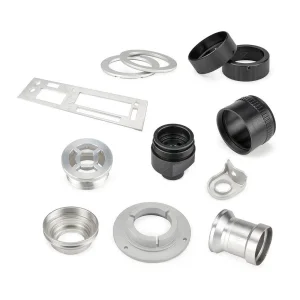
Explore our foundational range of precision components engineered with strict compliance, tight tolerances, and cutting-edge material technologies.
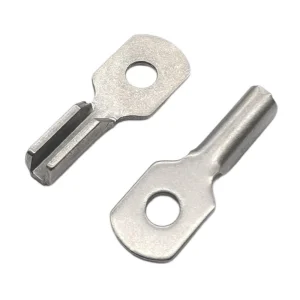
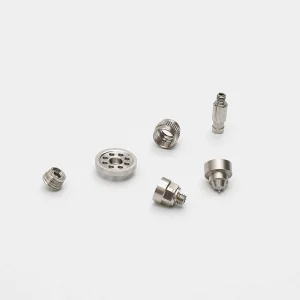
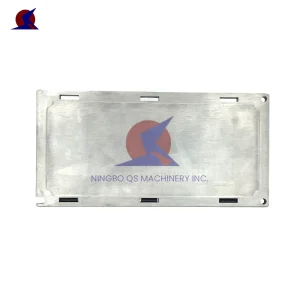
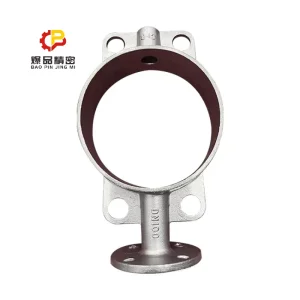
Ningbo HYDRA CNC Co., Ltd. is a professional manufacturer specializing in CNC machining services, metal fabrication, casting, and stamping solutions, serving as a reliable OEM partner for global industrial clients. The company is committed to delivering high-quality precision components that meet the diverse needs of industries such as automotive, machinery, electronics, aerospace, and general engineering.
HYDRA CNC offers a comprehensive range of manufacturing capabilities, including CNC milling, CNC turning, drilling, multi-axis machining, sheet metal fabrication, metal stamping, and casting processes such as investment casting and die casting. By integrating multiple production technologies under one roof, the company is able to provide efficient, cost-effective, and customized solutions from prototyping to mass production.
Equipped with advanced machinery, skilled engineers, and strict quality control systems, Ningbo HYDRA CNC Co., Ltd. ensures consistent product accuracy, durability, and performance. Each component undergoes thorough inspection to meet international standards and customer specifications.
In addition to standard manufacturing services, the company provides flexible OEM and ODM support, including design optimization, material selection, surface treatment, and branding customization. With a strong focus on quality, reliability, and customer satisfaction, HYDRA CNC continues to build long-term partnerships and deliver integrated manufacturing solutions to clients worldwide.
In modern industrial manufacturing, the demand for precision, speed, and structural integrity has shifted metal joining from manual labor to advanced robotic welding automation. As global OEM/ODM robotic welding services exporters, we recognize that our clients are navigating a rapidly transforming industrial landscapes. High-mix, low-volume (HMLV) environments require robotic cells that can adapt dynamically.
Traditional welding methods often struggle with thermal distortion, inconsistent penetration, and micro-cracking when applied to advanced metallurgical alloys. Automated systems overcome these pitfalls by integrating active feedback loops, weld-path calibration via laser triangulation, and real-time gas monitoring. These features ensure that every bead laid down is chemically homogeneous and structurally sound.
By employing smart optical seam tracking, our robotic welding units adapt to dimensional variances in real time. Laser sensors scan the joint geometry microseconds before the arc is struck, adjusting wire feed speed, travel rates, and torch angle on the fly.
We supply a diverse array of automated processes. Laser welding minimizes the Heat-Affected Zone (HAZ), reducing warping in thin-walled aerospace shells. Robotic TIG produces clean, porosity-free welds on stainless steels, while heavy-duty MIG excels in structural machinery frameworks.
Using computerized finite element analysis (FEA), our tooling designers map transient thermal paths. Interpass temperatures are regulated to avoid tensile residual stresses, ensuring our structural products achieve high fatigue life under harsh operation.
Choosing the correct automated welding modality is crucial to balancing cycle times, weld penetration depth, and post-weld machining requirements. The matrix below outlines how we deploy different automation technologies for OEM and ODM projects:
| Welding Process | Typical Materials | HAZ Width (mm) | Joint Strength Efficiency | Ideal Applications |
|---|---|---|---|---|
| Robotic Fiber Laser | SS 304/316, Al Alloys, Titanium | 0.2 - 0.8 | 95% - 98% | Thin aerospace casings, battery enclosures, medical devices |
| Robotic Pulse TIG (GTAW) | Carbon Steel, Nickel Alloys, Aluminum | 1.0 - 2.5 | 90% - 95% | Precision water pump housings, structural pipe joints |
| Robotic GMAW (MIG/MAG) | Structural Carbon Steels, Heavy Alloys | 2.0 - 4.5 | 85% - 92% | Heavy equipment frames, automotive chassis subframes |
| Automated Plasma Arc | High-Strength Steels, Copper Alloys | 0.5 - 1.5 | 92% - 96% | Deep-penetration thick sheet stamping assemblies |
For supply chain executives, industrial buyers, and global operations directors, sourcing fabricated weldments across borders involves complex risk management. Our position as a premier exporter of robotic welding services is built on three core pillars: traceability, compliance with international welding standards, and robust design-for-manufacturing (DFM) feedback loop mechanisms.
Global engineering demands adherence to recognized codes. All of our structural fabrications meet AWS (American Welding Society) D1.1/D1.2 and European standard EN 1090-2 specifications. Our procedures are validated through Welder Performance Qualifications (WPQ) and Procedure Qualification Records (PQR), ensuring our offshore clients receive components that are fully compliant with localized regulatory frameworks.
To guarantee zero defect escapees in critical load-bearing assemblies, we conduct non-destructive testing on structural joints. These methods include Ultrasonic Testing (UT) to detect internal inclusions, Dye Penetrant Inspection (DPI) for micro-cracks on the bead surface, and Magnetic Particle Testing (MT) for sub-surface discontinuities. Additionally, CMM inspections are applied to machined faces of weldments to check GD&T (Geometric Dimensioning and Tolerancing).
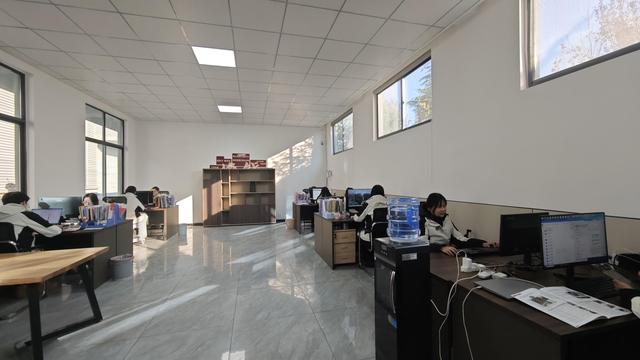
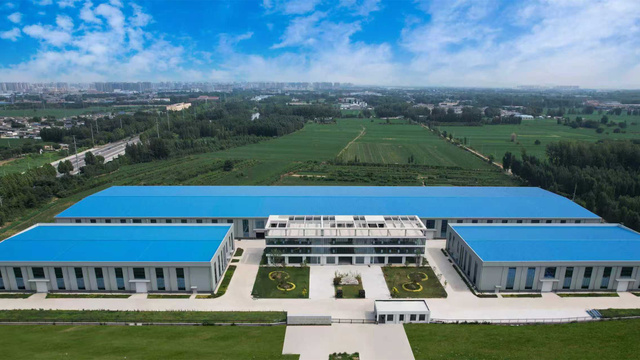
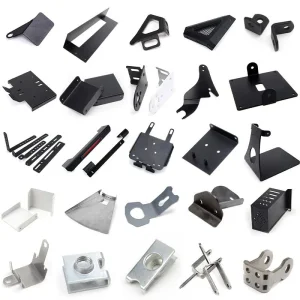
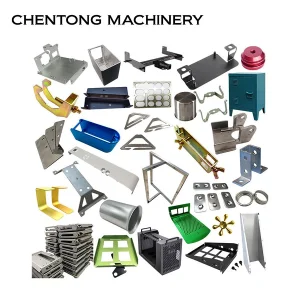
Step inside our advanced manufacturing ecosystem. The original images below showcase our production machinery, sheet metal forming, casting, and precision tooling operations that support our global robotic welding services:
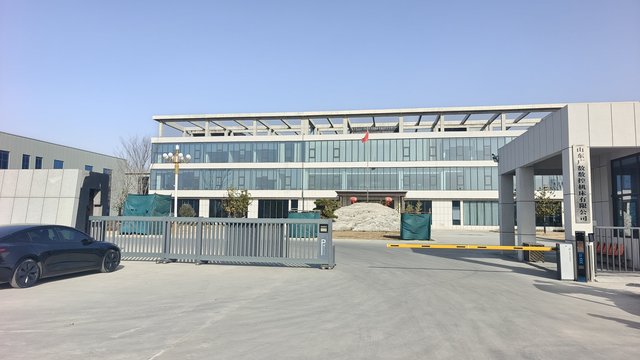
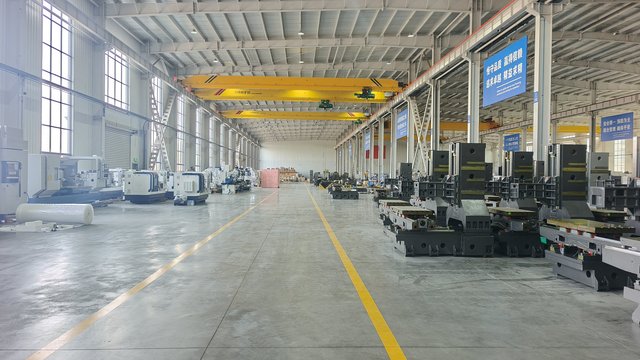
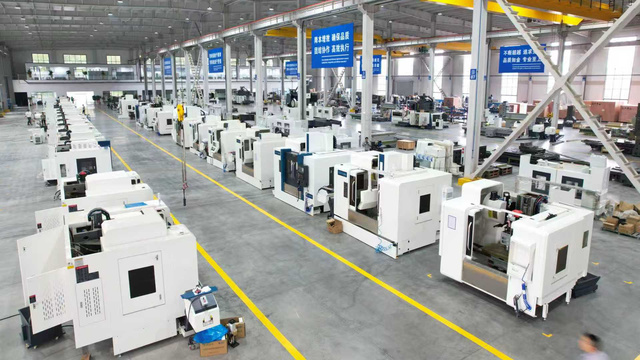
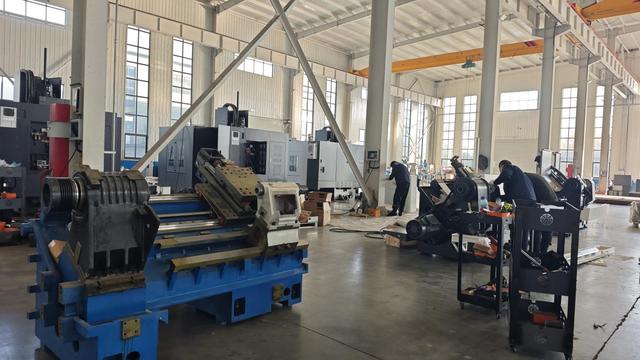

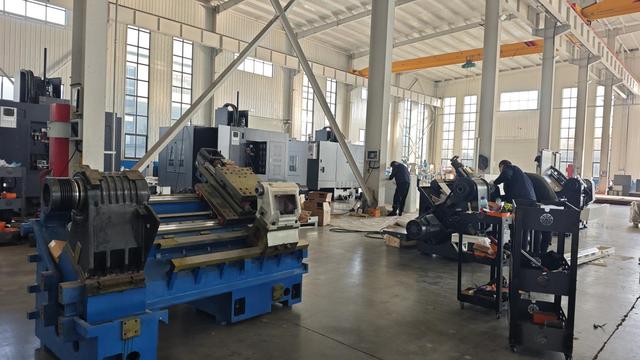
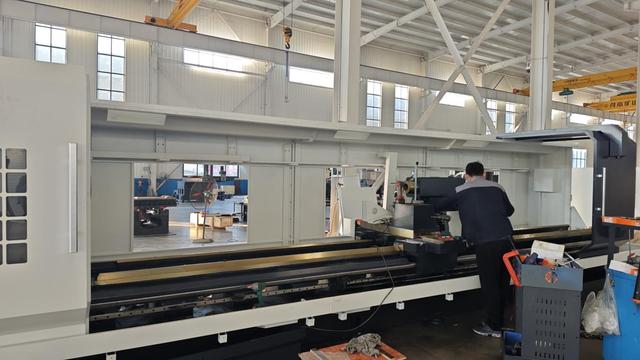
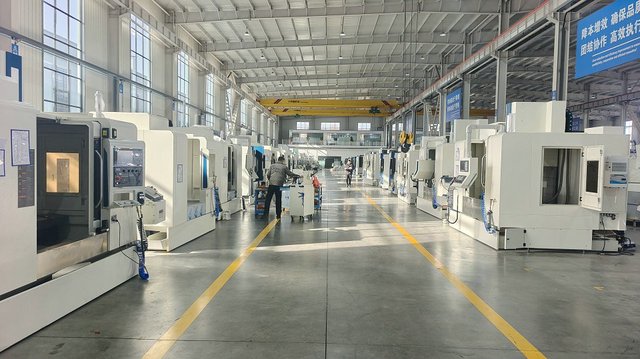
Our integrated approach, combining CNC machining, stamping, casting, and advanced automated robotic welding, allows us to deploy tailored solutions across complex global industry sectors:
Automotive structural parts require high tensile integrity to survive dynamic impact and fatigue loads. We specialize in light-weighting strategies using high-vacuum aluminum die casting and multi-axis CNC machining, combined with automated robotic MIG/laser welding to construct sturdy, vibration-resistant motor mounts and structural chassis components.
Heavy industrial frames support immense loads and require extremely tight tolerances to keep internal mechanical parts aligned. By combining heavy turning and deep hole drilling with robust robotic welding, we construct equipment frames that are thermally stress-relieved and ready to endure long-term vibration.
For pump and motor operations, fluid seal integrity is critical. We use progressive die stamping and deep drawing techniques on stainless steel, followed by precision robotic welding. This ensures pressure-tight joints that resist leaks, scaling, and corrosive fluids.
To maintain our market edge as an exporter of robotic welding services, Ningbo HYDRA CNC Co., Ltd. continuously invests in our technical infrastructure. Our future-looking technical roadmap includes:
By developing 3D virtual duplicates of our physical robotic cells, we can run simulation tests for collision check and weld torch reachability prior to casting or fabricating physical parts. This cuts setup times down by 80% for high-mix ODM orders.
We are working on integrating weld pool cameras with artificial intelligence algorithms. By reading the thermal spectrum of the molten metal on the fly, the robot adjusts welding current to avoid burn-through or insufficient penetration.
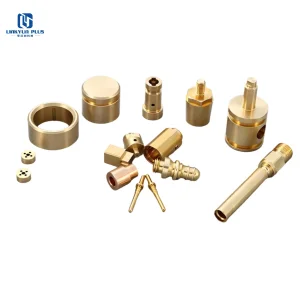
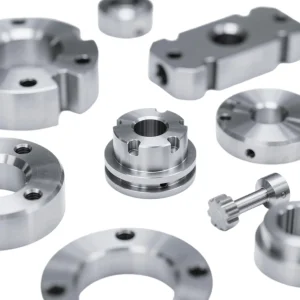
Discover more components from our comprehensive manufacturing catalog. Each product retains its original URL and high-fidelity product rendering.
 HYDRA CNC